

How much does it cost to charge an EV in Australia?
When people are weighing up whether to invest in an electric car, one of the first questions they ask is: “How much does it cost to charge?”
The short answer is that it depends on where and how you charge.
But almost always, charging an EV is much cheaper than filling up with petrol or diesel.
Key things that affect charging costs
Here are the key factors that influence what you actually pay:
Battery Size
The bigger the battery of the car, the more capacity it has, so it costs more in total to fill up. This is the same as a petrol or diesel car - the larger the tank, the more expensive to fill up.
But you also get more range.
Electricity prices
Home tariffs vary by location and provider.
Charging on a cheaper tariff (overnight or solar) can significantly reduce costs.
Charging at night or during off-peak hours during the middle of the day usually costs less than peak rates (which are usually early in the morning and in the evening when everyone in Tasmania turns on their heater).
Charger type
Home and workplace charging: often under $0–$15 for a full charge if you use off-peak or solar
Slow public AC (destination) charging: in between home and rapid charging options, depending on the charger.
Rapid public DC charging: around $30–$50+ for a large battery
Rewiring Australia have done some modelling against petrol and diesel prices, see below.
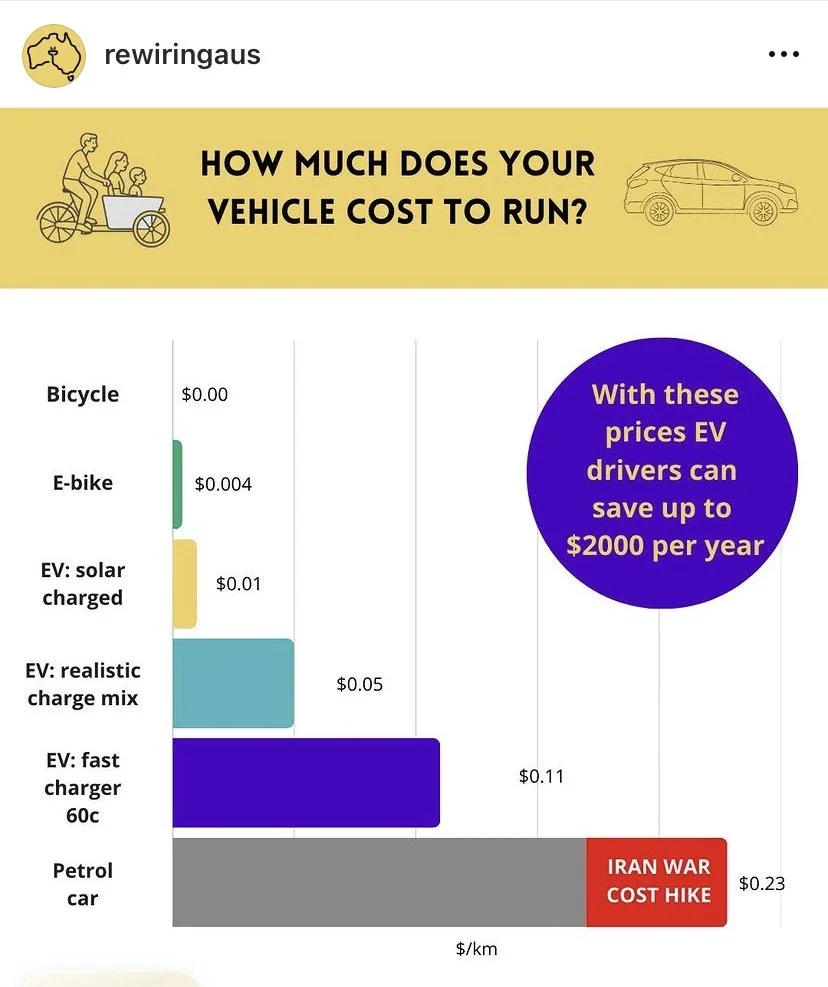
Data from Rewiring Australia shows the cost hike from the conflict in Iran for petrol and diesel vehicles.
Home charging: the cheapest option for daily use
Most EV charging happens at home because it’s the most convenient and affordable way to charge.
How much does charging at home cost?
At home, you’re using your household electricity, just like you would for lighting or appliances. The total cost to fully charge your EV depends on:
Your electricity tariff (how much you pay per kWh)
Whether you use off-peak or solar power
The size of your car battery
For example:
Charging at home on a normal tariff might cost around $10 or less to fill up a typical EV battery (around 60–70 kWh).
If you use off-peak power, or charge using your solar panels, the cost can be even lower — sometimes free if your solar system is big enough, or you use smart solar-only charging.
Get in touch if you’d like to chat to us about home charging options, or get an obligation free quote for installation of a home charger.
You can learn more about our favourite home chargers and check out the chargers we sell most on our online shop.
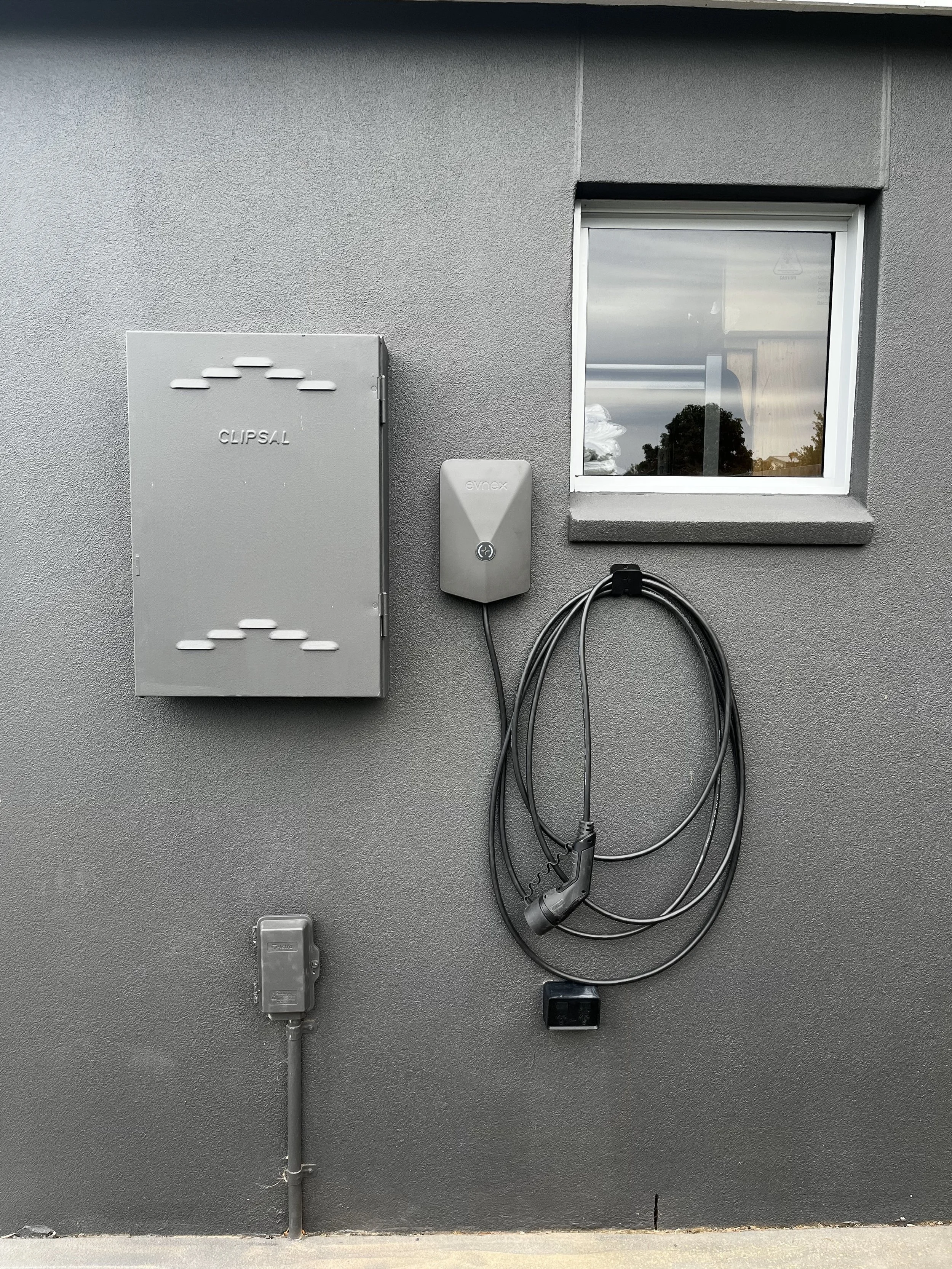
The Evnex E2 Plus home charger in action, installed by us in Hobart :)
Public charging: costs can vary
Public charging is handy when you’re on the road or away from home, but it can cost more than home charging.
If you want to find out more about public charging and how to make sure you’re prepared, head to our simple guide for public charging here.
Rapid public DC charging
This is fast, but pricier.
Fast chargers (often on highways and busy towns) deliver lots of power quickly, which is great for road trips.
But they’re usually the most expensive public option:
You might see prices charged per kWh plus a fee per minute
Typical costs can range around 40–60 c per kWh or higher depending on the network and location
A full rapid charge on a large battery can cost around $30–$50 or more, but it still often works out cheaper than a petrol fill-up.
Slow public destination charging
This is a slower charging option (similar to home charging).
Slower public chargers, like those in shopping centres public car parks or workplaces, are usually cheaper than fast chargers and closer in cost to home charging.
Some are free (if supported by local councils or businesses), while others might charge a modest rate for the power used.
Most cost effective approach to charging your EV
Here’s how many drivers balance cost and convenience:
Use home charging at night, or charge during the day using solar power or cheaper daytime tariffs
Only use public chargers on long trips or when required
That way you keep your daily charging cheap and save the occasional public charging for when you need it most.
The bottom line
Charging an EV in Australia is significantly cheaper than filling up a petrol or diesel car, whether you’re charging at home, at work, or using a public charger.
Get in touch if you’re considering installing a home charger or want help making charging as affordable and easy as possible, we’re here to help.
Whether it’s setting up smart charging, solar integration, or public RFID cards, just reach out.