

RFID cards
A simpler way to charge on the road
Most people charge their electric vehicle (EV) at home because it’s convenient, affordable, and easy.
But sooner or later, every EV driver will need to use public EV charging.
Whether you’re heading off on a road trip, running low during a busy week, or simply out longer than expected, it helps to understand how public charging works.
If you’re new to EV charging, check out our public charging guide for tips on charging speeds, EV charging apps, payment options, and what to expect on the road.
In this blog, we’re focusing specifically on RFID cards: what they are, why people use them, and how to set one up.
Paying for public charging
Most public EV chargers require an app or account to start and pay for a charging session.
At first, it can feel like there are a lot of different EV charging apps — because there are.
To get started, we usually recommend downloading:
Chargefox
Evie
Smart Charge
(Plus any other charging networks commonly used in your area.)
Once your accounts are set up, you’ll be able to:
Start a charging session
Monitor charging progress
Pay for the electricity you use
RFID cards: a simpler way to charge
If you want to make using public EV chargers quicker and easier, an RFID card can be a great option.
An RFID card is a small card or key fob linked to your charging account. Instead of opening an app every time you charge, you simply tap the card on a compatible charger to start your session.
Many EV drivers like using RFID cards because they:
Make charging faster and simpler
Can work even with poor mobile reception
Provide a handy backup if an app is slow or unavailable
You’ll still need to set up accounts and payment details through the charging apps first.
The RFID card simply gives you an easier way to access those accounts at the charger.
Some charging networks offer their own RFID cards, and certain cards can be linked across multiple compatible networks.
We recommend purchasing an Evie RFID card (as far as we’re aware, it is currently the cheapest). This card will work on all the different apps, once you have set it up.
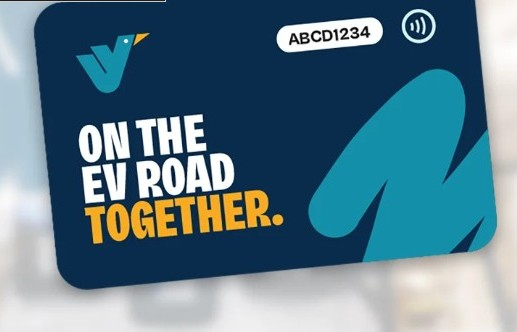
An Evie RFID card
A few things to keep in mind
Not every public charger accepts every RFID card
Some chargers still require the app for troubleshooting, receipts, or account management
It’s still a good idea to keep the main EV charging apps installed on your phone
If you’d like help setting up EV charging at home or understanding how public charging works, we’re always happy to help.
Please get in touch if you’d like more info or still have questions.
We’d love to hear from you.